How Experts Check And Repair Roofs After Lismore Storms
A strong storm can leave a roof looking mostly intact from the ground, while hidden damage continues to worsen above the ceiling line. A lifted tile, cracked ridge cap, blocked valley or shifted flashing may not seem obvious at first, but the next downpour can turn a minor fault into a ceiling stain, roof leak or costly internal repair. When it comes to roofing Lismore residents can rely on, a professional inspection after storm activity is about more than checking for broken tiles. It is about understanding how the whole roof system has handled wind, rain, debris and water flow.
Storm damage is not always dramatic. Sometimes the roof does not lose a tile or show a major hole. Instead, water enters through tiny gaps, old mortar loosens, gutters overflow or debris forces rainwater back under the roof covering. For property owners, knowing what experts look for helps explain why post-storm roof checks matter, when repairs are needed and how regular maintenance can reduce future risk.
Safety Comes Before Any Roof Inspection
The first part of any professional storm response is safety. Roofs can be slippery after rain, tiles may be unstable and damaged sections can shift under weight. Even experienced property owners can underestimate the risk of climbing a ladder after a storm, especially when wind, wet surfaces or loose debris are involved.
A professional roofer assesses the situation before stepping onto the roof. They look at access points, roof pitch, surface condition, nearby power lines, damaged branches and any visible movement in the roof structure. This careful approach helps protect both the worker and the property. It also prevents extra damage caused by walking over cracked tiles or weakened areas without the right technique.
A safe inspection begins with practical checks such as:
- Ladder access conditions
- Wet or loose surfaces
- Nearby electrical hazards
- Broken branches overhead
- Tile stability underfoot
Ground-Level Clues Often Reveal Roof Damage
Before accessing the roof, experts usually look for warning signs from ground level. This gives them a broad view of what may have happened during the storm. Missing tiles, uneven roof lines, sagging gutters, fallen ridge pieces and debris patterns can all point to areas that need closer inspection.
Ground-level checks are also useful because some damage is easier to spot from a distance. A line of lifted tiles, bent flashing or loose gutter section may stand out more clearly when viewed from below. Property owners can do a simple visual check from a safe place, but they should avoid climbing onto the roof themselves. What looks like a small issue may be connected to deeper damage that needs proper assessment.
Visible storm clues can include:
- Slipped or missing tiles
- Debris on roof sections
- Sagging gutter lines
- Dislodged ridge capping
- Water stains near eaves
Tiles and Ridge Capping Need Close Attention
Roof tiles are designed to protect the home from rain, but storms can crack, shift or lift them. Wind can move older tiles slightly out of position, while hail or fallen debris can cause cracks that are difficult to see from the ground. Once a tile is damaged, water can enter beneath it and travel before appearing inside the property.
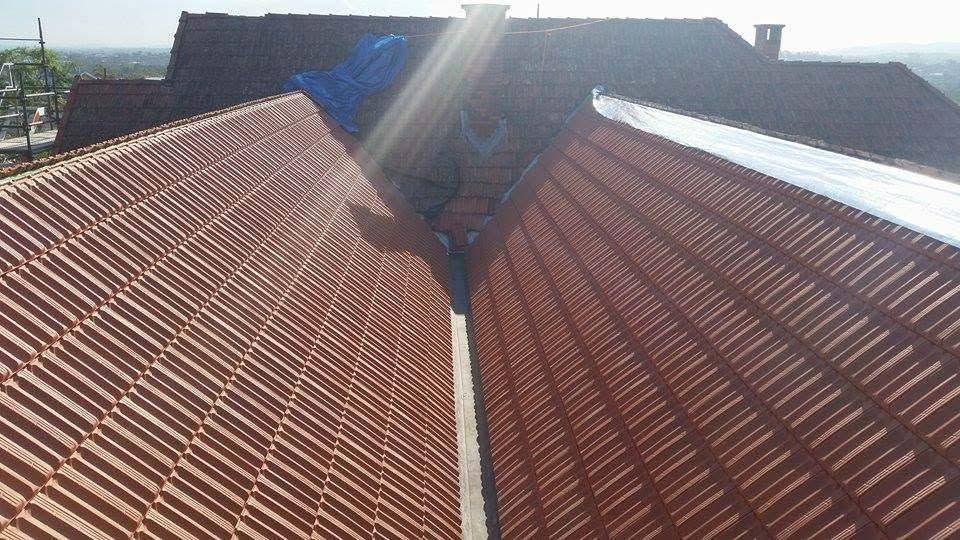
Ridge capping is another key area after storms. The mortar beneath ridge caps can loosen over time, and strong weather may expose existing weakness. Cracked bedding, broken pointing or displaced ridge caps can allow water entry and affect the roof’s overall weather resistance. Professionals check these areas carefully because small faults along the ridge can lead to repeated leaks if ignored.
Tile and ridge inspections often focus on:
- Cracked roof tiles
- Lifted tile edges
- Loose ridge caps
- Damaged pointing
- Gaps in bedding
Flashings and Valleys Control Water Movement
Flashings and valleys are critical because they direct water away from vulnerable joins, edges and roof changes. Flashings are commonly found around chimneys, walls, skylights, vents and roof penetrations. Valleys carry water where two roof slopes meet. During heavy rain, these areas handle a high volume of water, so any weakness can quickly cause leaks.
Storms may bend flashing, force debris into valleys or expose old seal failures. Leaves, twigs and broken tile pieces can also block water flow, causing rainwater to pool or backtrack under the roof covering. A professional will check whether water is moving correctly and whether any metal components, sealants or surrounding tiles need repair. This is one reason the services of an expert at roofing in Lismore are valuable after severe weather.
Important water-control areas include:
- Roof valleys
- Wall flashings
- Skylight surrounds
- Vent penetrations
- Chimney edges
Gutters and Downpipes Can Hide Storm Problems
Gutters and downpipes are often overlooked after a storm, but they play a major role in protecting the roof and exterior walls. If gutters are blocked, bent or pulling away from the roofline, water may overflow into eaves, fascia boards or wall cavities. Downpipes can also become blocked with leaves, silt and storm debris, causing water to back up during the next rainfall.
Experts check whether gutters are securely fixed, properly aligned and clear enough to move water away from the property. They may also look for stains under the gutter line, rust, loose brackets and sections where water appears to have overflowed. A roof can be in reasonable condition but still experience water issues if the drainage system is not working properly.
Gutter and downpipe checks may cover:
- Leaf and debris blockages
- Loose gutter brackets
- Bent gutter sections
- Overflow stains
- Blocked downpipes
Roof Leaks Are Traced From the Source
A ceiling stain does not always appear directly below the damaged part of the roof. Water can enter through one gap, travel along battens, insulation or framing, then show up somewhere else inside the property. This is why leak tracing requires experience. Guessing based on the stain alone can lead to repairs in the wrong area.
Professionals inspect both the outside roof surface and, where suitable, the ceiling or roof cavity. They look for damp insulation, water marks, mould, light gaps and signs of repeated moisture. This helps identify whether the leak is fresh storm damage, an older issue made worse by the storm or a drainage fault. Accurate diagnosis is important because a patched surface repair may not solve the underlying cause.
Leak tracing often involves checking:
- Ceiling stains
- Damp insulation
- Water trails
- Light gaps
- Roof cavity moisture
Repairs Should Match the Type of Damage
Storm repairs are not one-size-fits-all. A cracked tile may need replacement, while loose ridge capping may require repointing or rebedding. Damaged flashing may need refixing, resealing or replacement. Gutters may need clearing, realignment or repair depending on the extent of the problem. The right method depends on the roof type, age, condition and cause of the damage.
A professional roofer will usually prioritise urgent water-entry risks first, then recommend any additional maintenance that could prevent future issues. This may include replacing broken tiles, clearing valleys, repairing mortar, securing loose materials or restoring weatherproofing around penetrations. The goal is not simply to cover the visible fault, but to restore the roof’s ability to shed water properly.
Common post-storm repairs include:
- Replacing broken tiles
- Repointing ridge capping
- Repairing flashings
- Clearing roof valleys
- Securing loose fittings
Preventive Maintenance Reduces Future Storm Risk
Storm damage is often worse when small maintenance issues have been left unresolved. A loose tile, blocked gutter, ageing pointing or cracked seal may hold up during mild weather, then fail under pressure during heavy rain and wind. Preventive maintenance helps reduce the number of weak points before the next storm arrives.
Regular roof checks can identify issues early and allow property owners to plan repairs before they become urgent. This is especially useful for older roofs, properties with surrounding trees and homes that have had previous leaks. Maintenance may include cleaning gutters, checking ridge capping, replacing cracked tiles, inspecting flashings and ensuring drainage paths remain clear. A well-maintained roof is better prepared to handle severe weather.
Preventive roof care should include:
- Regular gutter cleaning
- Tile condition checks
- Ridge capping reviews
- Valley clearing
- Flashing inspections
Protect Your Roof Before the Next Storm
We at Goonellabah Roof Tilers help property owners in Lismore with storm-related roof inspections, tile repairs, ridge capping work, leak tracing and practical maintenance to keep roofs in safer condition. If your roof has been affected by heavy rain, wind or falling debris, contact us to arrange an inspection and get clear advice before small damage becomes a larger repair.